
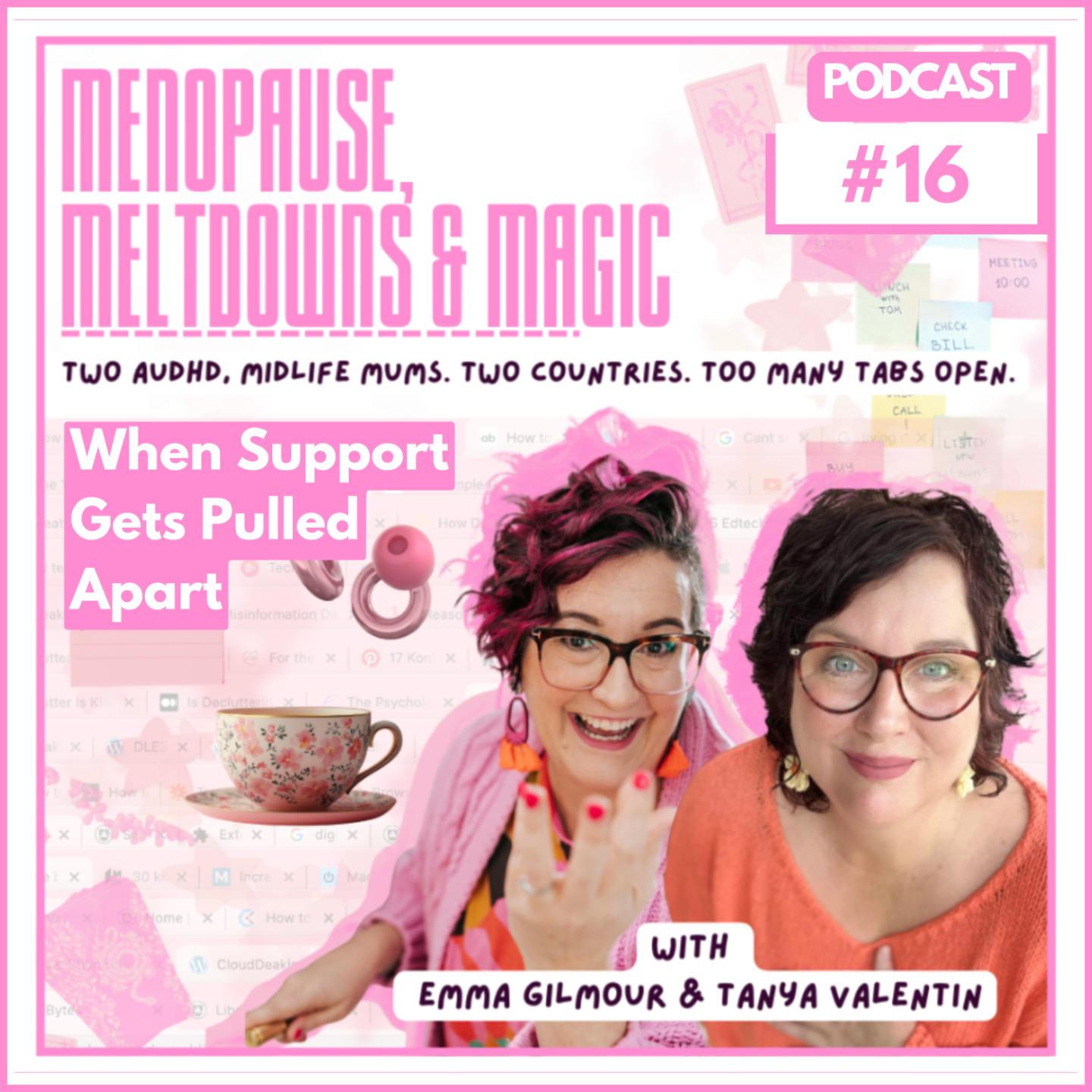
EPISODE 16
When Support Gets Pulled Apart
Many of us have felt it lately. Just as lived experience,community and neuro-affirming practice seemed to be gaining ground, the conversation in the media, in policy and across neurodivergent spaces appears to be swinging back toward talk of overdiagnosis, deficit and clinical pathwaysas the only ones that count.
In this conversation, Tanya and Emma share what they arenoticing and how it lands for them, as mothers of neurodivergent children and as neurodivergent women themselves. They talk about being believed, about mothers being blamed and gaslit, and about the very real frustration offamilies whose support needs are high and go unseen.
LISTEN NOWShow Notes
Episode 16
Many of us have felt it lately. Just as lived experience,community and neuro-affirming practice seemed to be gaining ground, the conversation in the media, in policy and across neurodivergent spaces appears to be swinging back toward talk of overdiagnosis, deficit and clinical pathwaysas the only ones that count.
In this conversation, Tanya and Emma share what they arenoticing and how it lands for them, as mothers of neurodivergent children and as neurodivergent women themselves. They talk about being believed, about mothers being blamed and gaslit, and about the very real frustration offamilies whose support needs are high and go unseen. They also wonder aloud about who benefits when a community is divided, and what might become possible when clinicians, peers and lived experience people are able to listen to oneanother.
If you have been feeling unseen, tired or quietly unsure of yourself lately, this may feel like a gentle place to land. You are not the only one noticing.
What we explore:
- Why the current mood around neurodivergent diagnosis, support and funding can feel like a step backward.
- The difference between the deficit model and the neurodiversity affirming model, and what each asks of systems.
- Lived experience, peer support and clinical care as partners rather than opponents.
- Mother blaming, gaslighting and the power imbalance many parents describe when seeking help.
- The hidden labour of finding practitioners who see you, and why individualised support matters.
- Why community spaces, including online ones, can lift shame and offer real belonging.
- The nervous system cost of being the one who goes against the grain.
Magic moments
Each episode closes with a magic moment. This week therewere two.
Emma: Sitting with an osteopath who understood the co-occurring conditions that often travel with autism and ADHD, and feeling the quiet relief of being seen and believed, for both parent and child.
Tanya: A little rainbow sticking out of a grey cloud after a rough night, and the reminder that even in a grey season there can still be a little bit of colour and hope.
Need more support
If you are a parent of a neurodivergent child in burnout and you would like something to hold you while you hold everyone else, download the free 10 Tiny Anchors Journey
If you are a woman who is questioning your relationship with alcohol, explore Emma's membership: https://www.hoperisingcoaching.com/bethelighthouse


Work With Emma
Single intensive counselling session — $247
1 hour 30 minutes - Initial Consult
You will get: Notes, Resources, Session Recording - downloadable for 7 days post consult
We will map out your personal roadmap to finding your version of that illusive ‘take it or leave it’ relationship with alcohol. Using my 3rd Way method. This is a complete option in itself and there will be no hard sell on anything else. If you do decide to continue with any of my packages afterwards, the cost of this session comes off the price as long as you book the longer program within a month of the session.
BOOK HERE
Want a text when we go live on Instagram?
Drop your details below and we’ll send you the direct link so you can join us, ask questions and be part of the conversation in real time.
Opt out anytime.
YES! SIGN ME UP